BUILD Equality
Building Leadership and Employment Pathways for Women in Construction
Empowering women to break barriers and lead change in the construction sector across Jordan and the UK.


Building Leadership and Employment Pathways for Women in Construction
Empowering women to break barriers and lead change in the construction sector across Jordan and the UK.
BUILD Equality is a British Council-funded partnership between Northumbria University (UK), Hashemite University, and Philadelphia University (Jordan). Through 2025, we are delivering transformative workshops, training activities, and peer-learning opportunities to help shape a more inclusive future for the construction sector.
To empower women in Jordan and the UK to advance into leadership and technical roles in the male-dominated construction sector by providing the necessary skills, opportunities, and support.
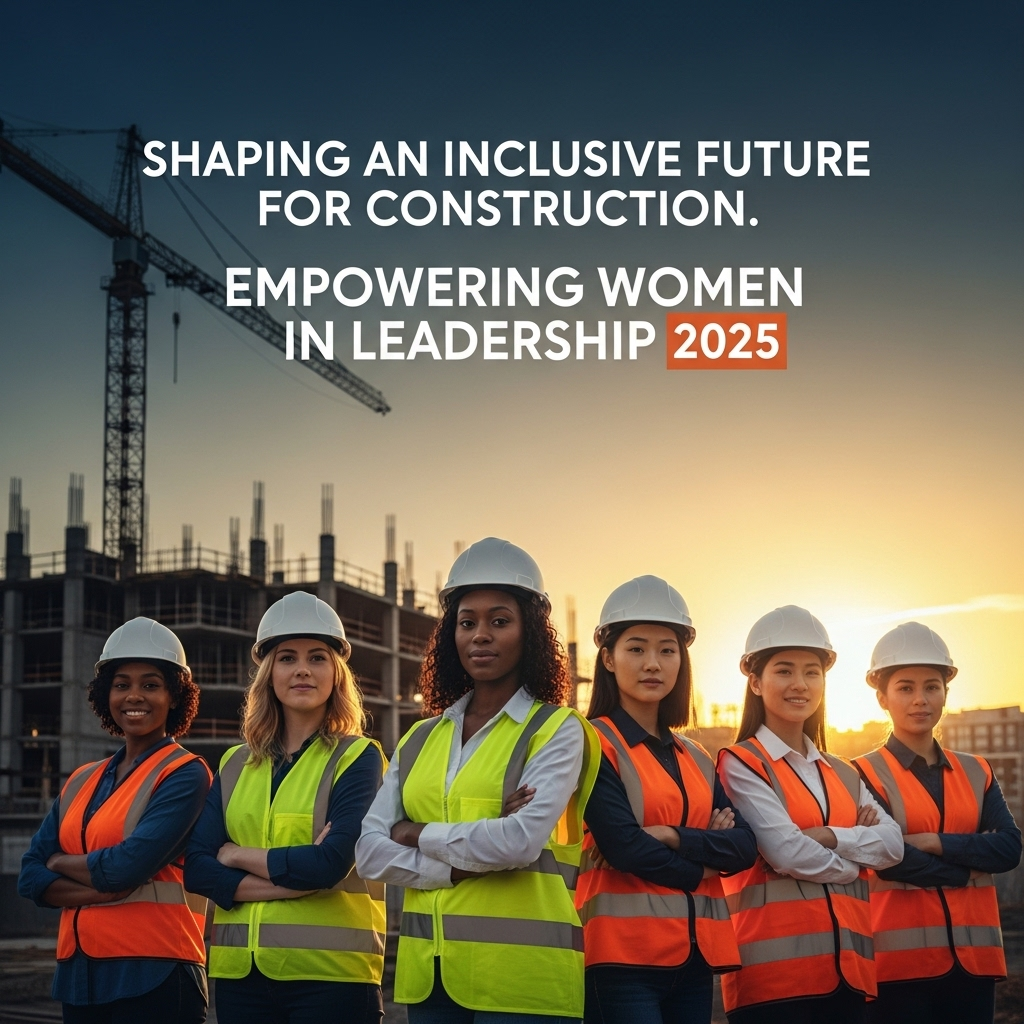
We provide leadership and employability training tailored to the unique challenges women face in the construction industry.
We address societal and institutional obstacles including gender biases, unequal pay, and limited mentorship opportunities.
Through international collaboration and knowledge exchange between Jordan and the UK, we create lasting pathways for women to secure leadership roles.
Transforming the Construction Sector Through Education and Empowerment
Kick-Off Workshop
The inaugural workshop set the foundation for the BUILD Equality project by bringing together participants to identify the main barriers women face in construction and emphasize the importance of capacity building and international collaboration.
Expert Presentations
Gender equality experts and women leaders in construction discussed gender stereotypes, workplace discrimination, and societal expectations affecting women in the sector.
Training Session 1: Networking Strategies
Participants learned effective networking and collaboration strategies to overcome isolation in male-dominated environments.
Training Session 2: Bottom-Up Approaches
Through case studies from Jordan and the UK, participants explored grassroots approaches to addressing gender equality in construction.
Participants gained a clear understanding of the critical challenges they face and how to begin addressing them, with foundational groundwork laid for future capacity-building sessions.
Building Employability Skills
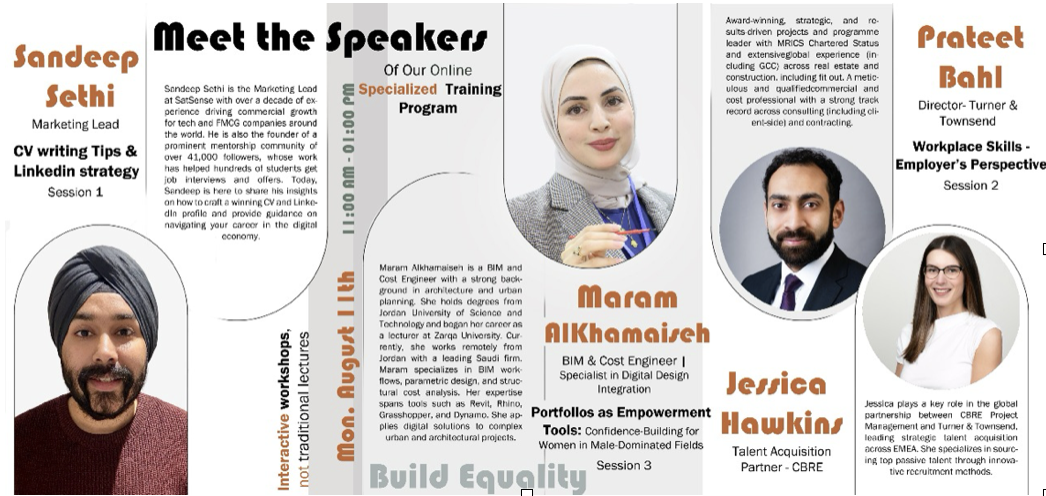
Workshop 2 focused on preparing participants for the transition from education to professional employment by improving CVs, boosting confidence, and understanding workplace rights in the construction sector.
Training Session 3: CV Writing and Interview Skills
Participants received construction-specific guidance on creating compelling CVs and performing effectively in interviews.
Training Session 4: Confidence Building
Through targeted exercises and group activities, participants developed the confidence needed to enter and thrive in male-dominated professional environments.
Guest Stories
Women early in their construction careers shared practical advice and personal experiences of overcoming challenges in the sector.
Participants left with improved employability skills and increased confidence in navigating job markets and securing roles in the construction industry.
Navigating Mid-Career Challenges
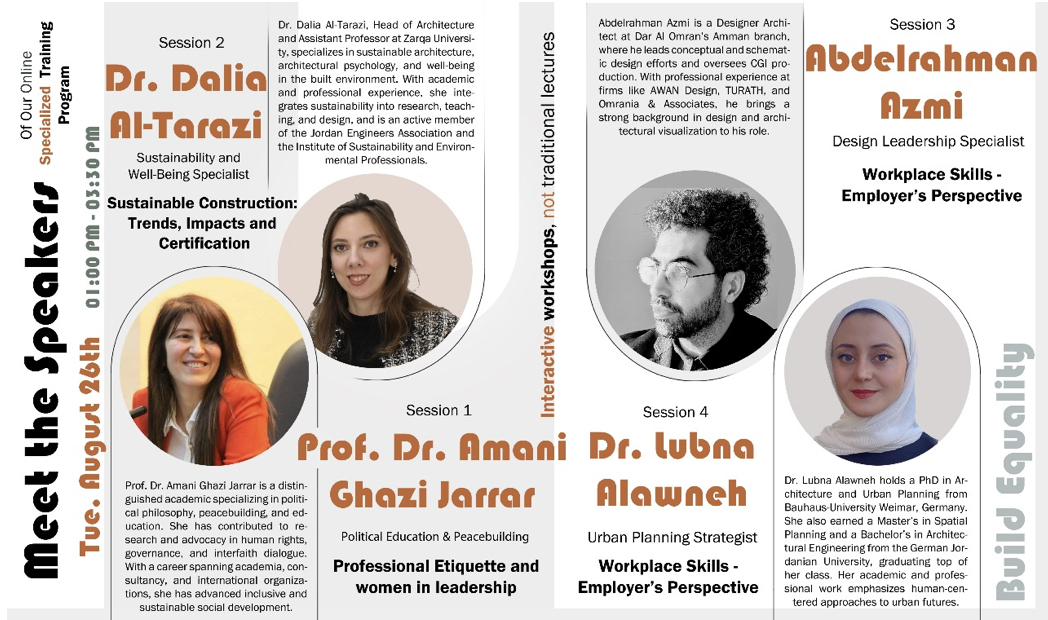
The third workshop addressed the mid-career challenges that women face in construction, including managing work-life balance, overcoming gender biases, and addressing discrimination in the workplace.
Training Session 5: Workplace Equality Strategies
Participants learned concrete strategies for managing work-life balance, handling discrimination, and advocating for pay equity.
Interactive Session: Male Allyship
Through facilitated discussions, participants explored how men can actively support the advancement of women in the workplace.
Leadership Stories
Women in leadership positions shared their experiences of overcoming institutional barriers to promotion.
Participants developed practical strategies to overcome institutional and cultural barriers, with increased knowledge of workplace support systems.
Skills for Leadership and Technical Excellence
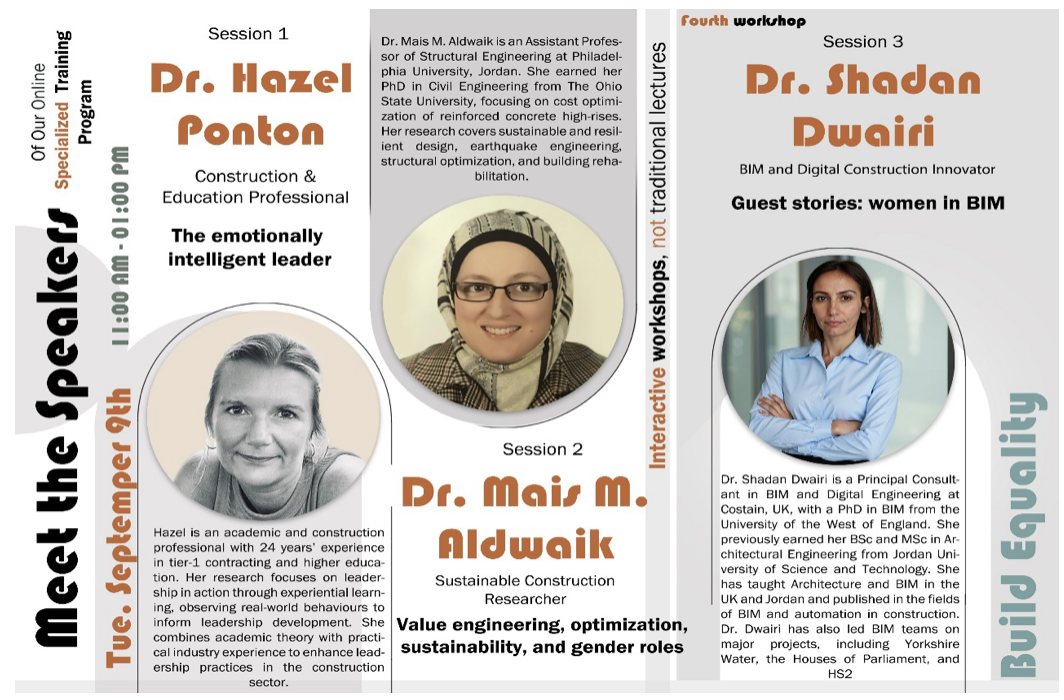
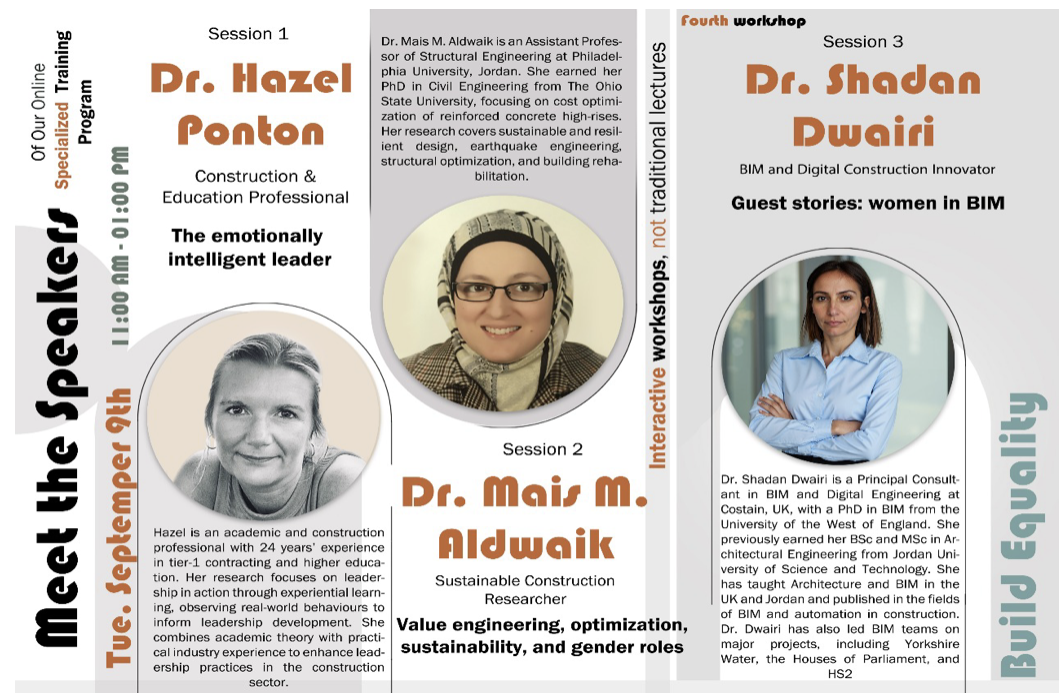
Workshop 4 equipped participants with the soft and technical skills essential for long-term career progression, including emotional intelligence, communication, time management, and technical competencies required for leadership in construction.
Training Session 6: Emotional Intelligence and Communication
Participants engaged in practical exercises to develop emotional intelligence and communication skills essential for navigating leadership roles.
Training Session 7: Time Management
Through targeted training, participants learned strategies for balancing professional pressures and managing time effectively.
Technical Skills Presentations
Guest speakers shared insights on computational and technical skills necessary for leadership positions in modern construction, including BIM and other advanced technologies.
Participants acquired essential soft and technical skills to advance their careers and prepare for leadership positions within the construction industry.
Date: November 2025 | Format: Hybrid (In-person in UK)
This closing workshop will bring together all participants to review key outcomes, discuss strategies for sustaining partnerships, and celebrate achievements with certificate presentations.
Materials and recordings will be uploaded after the event.
A Powerful Alliance for Change
Northumbria University is a research-intensive, modern university located in Newcastle upon Tyne, UK. It is recognised nationally and internationally for combining academic excellence with real-world impact. The University's School of Architecture and Built Environment is ranked among the UK's leading departments for research and education, with particular strengths in sustainability, urban resilience, and inclusive design.
In the most recent UK Research Excellence Framework (REF 2021), Northumbria was ranked 11th in the UK for research power in Architecture, Built Environment and Planning. Its academics and students work closely with industry, government, and communities to address contemporary challenges in construction, housing, and climate adaptation.
Philadelphia Private University was established in 1989 as a national higher educational institution. Philadelphia University has fourteen faculties and a student body of more than seven thousand students. The Faculty of Engineering was established in 1991 and expanded in 2018 to include technology disciplines, becoming the Faculty of Engineering and Technology.
The educational system emphasizes practical engineering skills that include engineering design, problem-solving, leadership, continuous learning, sustainability, creativity, and up-to-date software platforms. The faculty has been granted more than 60 local, regional, and international awards, and staff have published more than 400 research papers in leading conferences and journals.
The Hashemite University (HU) is a governmental university established by Royal Decree in 1991 and includes fifteen faculties. HU has been granted several local and international recognitions from different authorities including the Jordanian Accreditation and Quality Assurance Commission for Higher Education, the Accreditation Board for Engineering and Technology (ABET), and The National Architectural Accrediting Board (NAAB).
HU has achieved multiple local and international awards including the Medal of Independence (First Degree), Emirates Energy Award (Golden Prize), and Prince El Hassan Bin Talal Award for Scientific Research. The University has adopted the UN Sustainable Development Goals through implementing renewable and sustainable energy initiatives.
The BUILD Equality project is funded by the British Council through the Going Global Partnerships programme. The British Council supports international collaboration, capacity building, and knowledge exchange between UK and Jordanian partners.
Find out more about the British Council's international funding and partnership opportunities on their website.
Leading Experts in Construction and Gender Equality

Dr. Amit Kant Kaushik is an Assistant Professor in Architecture and Built Environment at Northumbria University. His research focuses on the intersection of healthy buildings, climate adaptation, digital twins, and indoor environmental quality. As Principal Investigator of the BUILD Equality project, he brings extensive expertise in interdisciplinary research and stakeholder engagement.

Dr. Ahlam Ammar Sharif is an Associate Professor in Architectural Engineering. She specializes in sustainability, design-use dynamics, gender equality in education, architecture, and construction, with over 20 papers published in Q1-rated international journals covering these areas.

Dr. Ala'a Alshdiefat is an Associate Professor in Civil Engineering with more than 10 years of construction experience. He is a member of the central council of the Jordanian Engineering Association and has received several grants from international sponsors for research on construction management, gender equality, and sustainability.

Arch. Noor Alhuda Abu Ghunmi brings valuable expertise to the BUILD Equality project, contributing to research and workshop facilitation efforts across Jordan.
We welcome enquiries about the BUILD Equality project, opportunities for collaboration, and questions about our workshops and resources.
Project Coordinator
Dr. Amit Kant Kaushik
Northumbria University
BUILD Equality is funded by the British Council through the Going Global Partnerships programme. The project runs from January to December 2025 and represents a collaboration between Northumbria University (UK), The Hashemite University (Jordan), and Philadelphia University (Jordan).
We are committed to creating lasting change in the construction sector by empowering women to break barriers and advance into leadership and technical roles.